June 8, 2026 • Adaeze Okonkwo • 9 min reading time • Prices verified June 18, 2026
One-Piece Swimsuits for Plus Sizes: Why Torso Length Is the Fit Variable Nobody Talks About
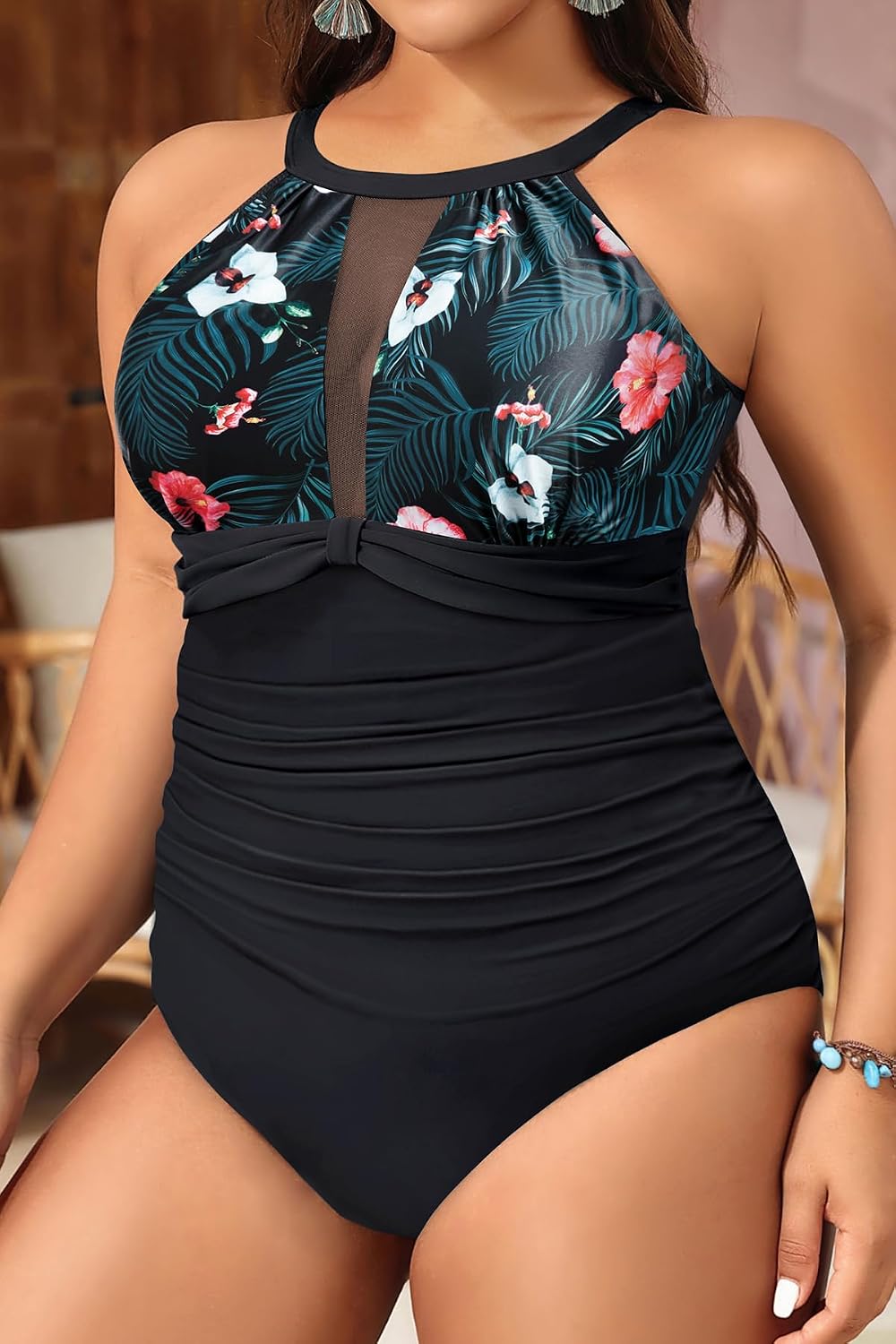
You just ordered a gorgeous one-piece in your usual size, it arrives, and within five minutes of putting it on you know something is wrong — the crotch seam is pulling upward, the bust cups are sitting two inches below where they should be, and the straps are already maxed out. You haven’t done anything wrong. Your size isn’t the problem. Your torso length is. Torso length is the vertical distance from your shoulder — where a strap sits — down to the crotch seam of a swimsuit. It’s the single measurement that determines whether a one-piece fits like a second skin or performs a slow, uncomfortable creep upward every time you move. Despite being the variable that derails more one-piece purchases than any other, it rarely appears on size charts, and almost never comes up in mainstream buying guides. This article changes that. We’ve organized what you actually need to know — how to measure, what the numbers mean, which brands engineer for longer torsos, and how to read a product page so you don’t have to guess — so you can make a confident decision without burning a return label.
Why Standard Size Charts Keep Getting This Wrong
Most swimwear size charts are built around three measurements: bust, waist, and hip. That trio is useful — it gets you into the right column on a grid — but it tells you nothing about the vertical dimension of your body. Two women can share an identical 44-inch bust, 38-inch waist, and 48-inch hip measurement and still have torso lengths that differ by three or four inches. On a standard one-piece swimsuit, that difference is the margin between “fits perfectly” and “physically unwearable.”
The Swimsuits For All extended size fit guide acknowledges this directly, noting that customers in sizes 18W and above frequently report fit failures that are unrelated to circumference measurements and instead trace back to insufficient torso coverage. Glamour’s editorial feature on swimsuit shopping similarly flags torso length as the most underreported fit variable for one-piece styles, particularly for women who are taller than 5’5” or who carry more volume through the midsection — because a higher-volume torso often means a functionally longer torso even at average height.
Here’s the mechanical reality: a one-piece swimsuit is essentially a closed tube. Every inch of stretch budget it has must be distributed vertically from shoulder to crotch. If your torso is longer than the garment was engineered for, that stretch budget runs out before the suit reaches its intended position. The straps extend to maximum length, the bust cups migrate south, and the crotch seam pulls north. No amount of adjusting fixes a suit that is structurally too short for your torso. This is an engineering problem, not a sizing problem — and it has engineering solutions.
How to Measure Your Torso (and What the Numbers Actually Mean)
Measuring torso length takes about two minutes and a soft measuring tape. Here’s the method that produces actionable numbers:
- Stand in front of a mirror in your underwear.
- Place the end of the tape at the highest point of your shoulder — roughly where a swimsuit strap would naturally rest.
- Run the tape down over your bust, across your stomach, and into the crotch.
- Note the measurement in inches.
By the numbers:
- Under 28 inches → standard torso; most one-pieces sized to your bust/hip measurements will fit vertically
- 28–31 inches → transitional zone; a standard suit may work with fully extended straps, but long-torso styles are a safer bet
- 31–34 inches → long torso; long-torso-specific styles or adjustable-length suits are effectively required
- 34 inches and above → extra-long torso; brand-specific sizing documentation and customer reviews become your primary research tool
The Lands’ End one-piece swimwear fit documentation places the boundary between standard and long-torso categories at 29 inches, and recommends that any customer above that threshold specifically filter for long-torso or “tall” swim styles rather than relying on standard sizing. That’s a useful rule of thumb, though our read of aggregated reviewer feedback suggests 28 inches is the more conservative — and more reliable — trigger point for plus-size frames, where additional body volume tends to increase the functional torso demand.
What “Long-Torso” Actually Means on a Product Page (and What It Doesn’t)
This is where careful reading pays off. “Long-torso” labeling is not standardized across the industry, and two suits with the same label can differ meaningfully in actual length.
Adjustable-strap suits are the most common “solution” offered at the mid-range price point. Brands like Swimsuits For All and Eloquii frequently build halter and convertible-strap designs with three to five inches of strap adjustment. That range genuinely helps — it’s not marketing — but it addresses only the top of the torso length equation. If the body of the suit is cut short, longer straps just create a different geometric problem: the cups pull upward at an angle rather than sitting flat, and the suit still rides.
Purpose-built long-torso styles are a different category. Miraclesuit’s published product specifications for their long-torso styles cite a minimum of two additional inches of body length compared to their standard-torso equivalents, achieved through re-engineered side seaming and repositioned underwire channels — not simply longer straps. Reviewers at Good Housekeeping’s 2025 plus-size swimsuit roundup specifically note that Miraclesuit’s long-torso Illusionist one-piece performs differently from their standard-length version in back coverage and strap tension, confirming that the length difference is structural.
Torso-length customization at the premium tier — think Gottex and Magicsuit — sometimes involves separate short, regular, and long torso SKUs. This is the most precise solution available off the rack, but it requires knowing your measurement going in. Refinery29’s 2025 plus-size swim guide recommends treating any Gottex purchase as a two-variable decision (cup size and torso length) rather than a single-size selection, which aligns with how the brand’s own sizing documentation is structured.
The practical checklist for reading a product page:
- Does the page specify actual suit length in inches from shoulder to crotch? (Most don’t — this is a gap.)
- Is “long torso” achieved via strap adjustment, body length, or both? The product description usually signals this if you look for phrases like “extended body panel” or “repositioned underwire.”
- Are there customer reviews that mention height and torso length? Aggregated reviewer comments remain the most reliable source of real-world torso-fit data, and most major retailers now display height in user reviews.
The Underwire Variable: How Torso Length Affects Bust Support Architecture
For full-bust shoppers — and for anyone in a cup-sized one-piece above a D — torso length interacts with underwire placement in a way that matters structurally, not just aesthetically.
Underwire channels in one-piece swimsuits are bartack-stitched at both the strap attachment point and the side seam junction. That bartacking is designed to keep the wire in a fixed geometric relationship to the bust. When a suit is too short for your torso and rides up, the underwire migrates with it — moving out of the inframammary fold (the natural crease beneath the breast, where underwire is designed to sit) and up onto breast tissue. The result is the familiar combination of underwire pressure on soft tissue, cup gaping at the bottom, and accelerated wire-channel blowouts, because the wire is under lateral tension it was never designed to handle.
Anita Care’s construction documentation for their underwire one-piece styles specifies that their wire channels are engineered with a fixed relationship to the side seam length — meaning the support architecture only functions correctly when the suit is at its intended torso position. This is a useful framing for any underwire one-piece: the support system is calibrated for a specific geometry, and torso length is what determines whether you’re operating within that geometry or outside it.
The practical implication: if you’re shopping an underwire one-piece and your torso measurement places you in the transitional zone (28–31 inches), prioritize brands that offer both long-torso and underwire in the same style. Not all do. Miraclesuit, Anita Care, and Lands’ End’s Tugless Tank category are among the brands where that combination reliably appears at the time of writing.
The If-Then Decision Framework
You now have the measurement and the vocabulary. Here’s how to translate them into a purchase decision:
If your torso is under 28 inches: Standard sizing in your bust/hip range will generally work. Focus your fit energy on cup sizing and fabric grade rather than torso length. The construction variables that matter most to you are underwire channel quality and strap adjustability for weight distribution.
If your torso is 28–31 inches: Treat every one-piece purchase as torso-length-pending until proven otherwise. Filter for long-torso styles as a first screen, then verify via customer reviews that include height data. At this range, an adjustable-strap suit may work, but check that the body panel length — not just the strap — is extended.
If your torso is 31–34 inches: Long-torso-specific construction is effectively required. At the mid-range, Lands’ End’s documented long-torso styles and Swimsuits For All’s taller silhouettes are the most consistently reviewed options. At the premium tier, Miraclesuit’s long-torso SKUs and Magicsuit’s torso-length variants are worth the price premium specifically because they solve this problem structurally.
If your torso is above 34 inches: Prioritize brands that publish actual suit length in inches, not just “long torso” labeling. Customer reviews from women who share your height and frame are your most reliable data source. Consider brands that offer torso-length customization or brands in the specialty/competitive-swim market, which tends to engineer for a wider range of vertical dimensions by default.
One final variable worth tracking as you shop: return policy generosity. Because torso length is so difficult to verify from a product page alone, the ability to try a suit at home without a hassle is part of the purchase calculus. Good Housekeeping’s 2025 swimsuit coverage notes that Lands’ End and Swimsuits For All both offer relatively generous return windows with minimal friction around sanitary liner requirements — a meaningful practical advantage when you’re working through fit experimentation across two or three torso-length options.
The information exists to make this decision confidently. Torso length just requires you to go looking for it — and now you know exactly what you’re looking for.