June 9, 2026 • Adaeze Okonkwo • 9 min reading time • Prices verified June 18, 2026
Strapless and Bandeau Plus-Size Swimsuits: The Support Engineering Behind Going Strap-Free
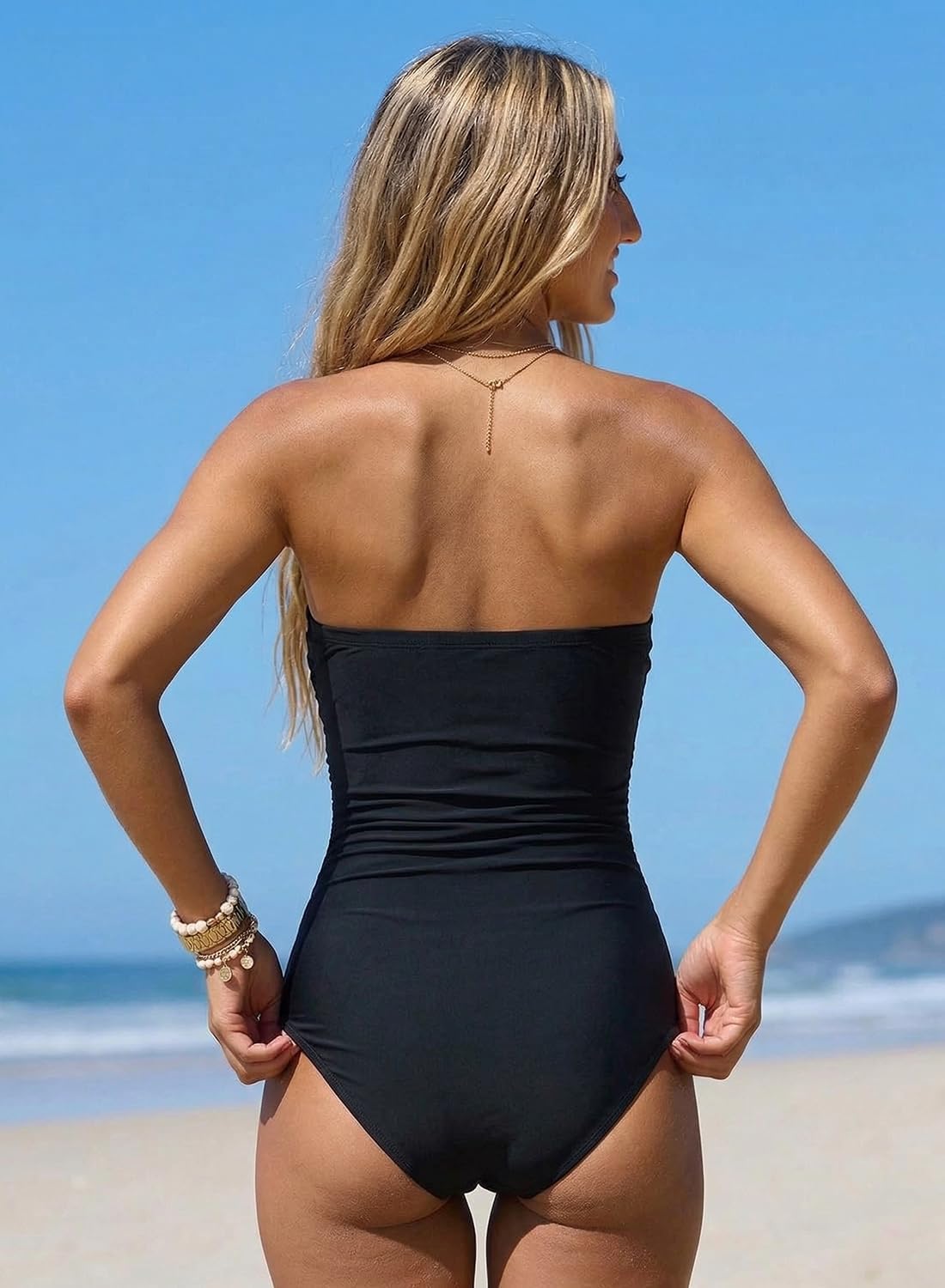
You’ve been in a strapless swimsuit before that spent the entire afternoon slowly migrating south — not because you did anything wrong, but because the suit was never engineered to stay up without straps in the first place. It was just a regular bandeau (a wide, tube-style band of fabric worn across the chest) with the shoulder straps removed. That’s a very different thing from a strapless suit built with internal structure designed to hold a larger bust in place using grip, compression, and carefully placed boning or underwire. The first type is a styling shortcut. The second is a genuine engineering solution — and once you know what separates them, you can shop strapless with real confidence instead of hoping for the best.
This guide is organized around the decisions you’re actually facing: which structural features matter at which cup sizes, where the price-to-performance curve makes sense, and the clearest “if X, then Y” rules we can give you for choosing between bandeau, underwire strapless, and hybrid strap-convertible styles. We’ve pulled from published brand specifications, aggregated buyer reviews, and editorial research across the specialty swimwear market so you don’t have to open 30 tabs to get here.
Why Strapless Support Is Harder — and More Solvable — Than You Think
The fundamental challenge with strapless swimwear is load transfer. In a strapped suit, vertical weight — the downward pull of breast tissue, multiplied by movement and water — travels up through the shoulder straps and distributes across your upper back. Remove the straps and that entire load has to be absorbed horizontally: by the band that wraps your ribcage, the grip at the top edge of the suit, and whatever internal structure sits between you and the fabric.
For smaller cup sizes, horizontal grip alone can handle that load reasonably well. But as cup size increases — roughly from a D-cup upward — the weight differential starts to exceed what a simple elastic band can manage, especially in water, where repeated wave impact and movement create dynamic forces the suit wasn’t designed for.
This is where construction-level details stop being marketing language and start being actual variables. The features worth examining:
Underwire channel reinforcement. An underwire (the semi-rigid wire or resin channel sewn into the lower cup) serves two purposes in a strapless suit: it holds cup shape and, critically, it gives the band something structural to anchor against. Per InStyle’s research on swimsuits for larger busts, underwired strapless styles consistently outperform non-underwired alternatives in user-reported lift and all-day security at DD-cup and above. The weak point, across brands, is where the wire terminates at the side seam — if that junction isn’t reinforced with bartack stitching (a dense cluster of machine stitches that prevents fraying and wire migration), the wire can rotate or punch through the channel fabric after repeated saltwater exposure.
Silicone grip tape. The interior top edge of a well-engineered strapless suit will have a strip of silicone — sometimes a single 1-inch band, sometimes a double-row grip. This creates friction against skin that resists downward slippage. Good Housekeeping’s plus-size swimwear research notes that reviewers consistently distinguish between suits with functional grip tape and suits where the tape is too narrow or positioned too low to actually catch movement.
Boning panels. Boning — short, flexible plastic or spiral-steel rods sewn vertically into the suit body — functions like a corset stay, preventing the band from rolling or collapsing under breast weight. Premium strapless options from brands like Miraclesuit and Magicsuit include internal boning alongside underwire. Glamour’s editorial coverage of plus-size swimwear specifically calls out Miraclesuit’s structured strapless one-pieces as a consistent reference point among buyers who want bandeau-adjacent aesthetics with clinically serious support.
Band width and fabric tension. The band at the back of a strapless suit is doing the majority of the anchoring work. A 3-inch-wide back band with high-denier fabric (think Carvico or Xtra Life Lycra blends, which have tighter fiber weaves and better stretch recovery than standard polyester-Lycra) distributes load more evenly than a narrow, low-denier alternative. Narrow bands in thinner fabric tend to roll — and once they roll, grip tape and underwire lose their mechanical advantage entirely.
The Price-to-Construction Map: What You Actually Get at Each Tier
Let’s run the math across three price bands, because the construction differences are real and the tradeoffs are worth naming explicitly.
By the numbers: strapless plus-size swimwear construction tiers (2026 market)
| Price range | Typical features | Cup-size ceiling before fit degrades |
|---|---|---|
| $35–$70 (ASOS Curve, Amazon brands) | Silicone grip, no underwire, light boning if any | C/D cup — reviewers above this report consistent slippage |
| $80–$130 (Swimsuits For All, Lands’ End, Eloquii) | Underwire channel, wider back band, molded cups | DD/E cup — per aggregated Swimsuits For All buyer reviews |
| $140–$260+ (Miraclesuit, Magicsuit, Gottex, Anita Care) | Full underwire with bartack, double-row silicone, boning, power-mesh lining | F/G cup and beyond — Anita Care’s underwire architecture specifically rated for larger busts in brand technical specs |
What those numbers mean in practice: if you’re a D-cup or smaller and you’re not a strong swimmer (lower dynamic load), the $35–$70 tier is genuinely viable. Refinery29’s strapless swimsuit roundup found that lighter-activity beach wear at that price point performed adequately for reviewers in the D-cup range who weren’t doing lap swimming or bodysurf. Above D-cup, the construction gap between tiers is wide enough that spending $80–$130 isn’t an upgrade — it’s a prerequisite for the suit to function as described.
The $140+ tier isn’t about aesthetics over function. It’s about structural margin. Bartacked wire channels, per Harper’s Bazaar’s coverage of specialty swimwear construction, are the difference between a suit that degrades after a season of saltwater use and one that maintains wire placement after repeated exposure. If you’re wearing this suit more than ten times a season in salt or chlorine, that durability premium pays back.
Silhouette Variables: Bandeau vs. Underwire Strapless vs. Convertible
Not all strapless styles are the same shape, and the shape affects fit in ways that interact directly with bust-to-hip ratio — the measurement differential between your fullest bust point and your hip, which drives whether a one-piece will gap at the bust, pull across the hips, or fit neither zone well.
Bandeau bikini top (separates). The most versatile format because cup depth and band size are independent variables. Buyers with a significant bust-to-hip differential — say, 14 inches or more — often report, per Glamour’s plus-size swimwear buyer research, that separates allow them to size the top and bottom to their actual measurements rather than compromising on one. The tradeoff: bandeau bikini tops require adequate underwire or a very high-compression fabric to work above a D-cup without straps. Many reviewers at the $35–$70 tier note they add the included removable straps for anything more active than sunbathing.
Underwire strapless one-piece. The most architecturally serious option. The one-piece format gives the suit a closed torso loop — the back band, the body of the suit, and the front cup structure work as a unified system rather than separate pieces. This closed-loop geometry means force is distributed across more attachment points, which is why one-pieces tend to outperform bandeau bikini tops at larger cup sizes. The downside: torso length is fixed. Women with a longer torso than the pattern assumes will experience ride-up, regardless of cup support. If one-pieces have historically ridden up on you, look for brands that publish torso length measurements — Lands’ End includes this in their product specs, and it’s worth cross-referencing against your own torso measurement (shoulder to crotch) before ordering.
Convertible / hybrid strapless (straps included but removable). The honest middle ground. You get strapless aesthetics when conditions allow, strap support when you need it. Self’s expert guidance on strapless bras for larger busts draws a direct parallel here: the structural logic of a convertible bra — full support architecture with optional strap attachment — applies equally to swimwear. For buyers who want strapless capability but have reservations about committing to it all day, convertible strapless is the lowest-risk entry point. The construction still needs to support your cup size without the straps engaged; don’t assume strap-convertible means the strapless function is secondary.
The Decision Rules
If you’ve read this far, you’re probably trying to resolve a specific buying question. Here are the clearest “if X, then Y” rules we can offer based on aggregated published research and brand construction specs.
If you’re a D-cup or below and want to wear the suit casually at the beach (low activity): The $35–$80 range is viable. Prioritize silicone grip tape and a wide back band. Skip suits where the interior description doesn’t mention either.
If you’re a DD-cup or above: Budget at least $80–$130 for a mid-tier underwire strapless. Below this range, user reviews consistently document the same outcome — the suit works until you’re actually in the water, then doesn’t. That’s not a product defect; it’s a construction ceiling.
If you’re an E-cup or larger and plan to be active: The $140–$260+ tier isn’t optional — it’s where the construction is actually matched to the load. Miraclesuit and Anita Care are the most consistently cited names in this category across Good Housekeeping and InStyle editorial research. Gottex and Magicsuit appear in Harper’s Bazaar’s premium swimwear roundups for buyers who want sculptural aesthetics alongside structural support.
If one-pieces have historically ridden up: Measure your torso before ordering any one-piece, strapless or otherwise. The engineering doesn’t matter if the length is wrong. Lands’ End publishes torso measurements in product specs; it’s one of the few mass-market brands that does this transparently.
If you want the strapless look but aren’t ready to commit: Choose a convertible style with straps that meet your cup-size requirements fully engaged. You get the aesthetic option without giving up functional security. Just confirm the suit’s underwire and grip architecture is sized for your cup — the presence of removable straps doesn’t compensate for undersized structure.
Strapless isn’t inherently risky at a fuller size. It’s only risky when the suit’s construction doesn’t match what you’re asking it to do. Know the architecture, match it to your measurements, and the category opens up considerably.