May 23, 2026 • Adaeze Okonkwo • 8 min reading time • Prices verified June 18, 2026
Plus-Size Tankini Sets With Real Tummy Control: What the Seaming Actually Does
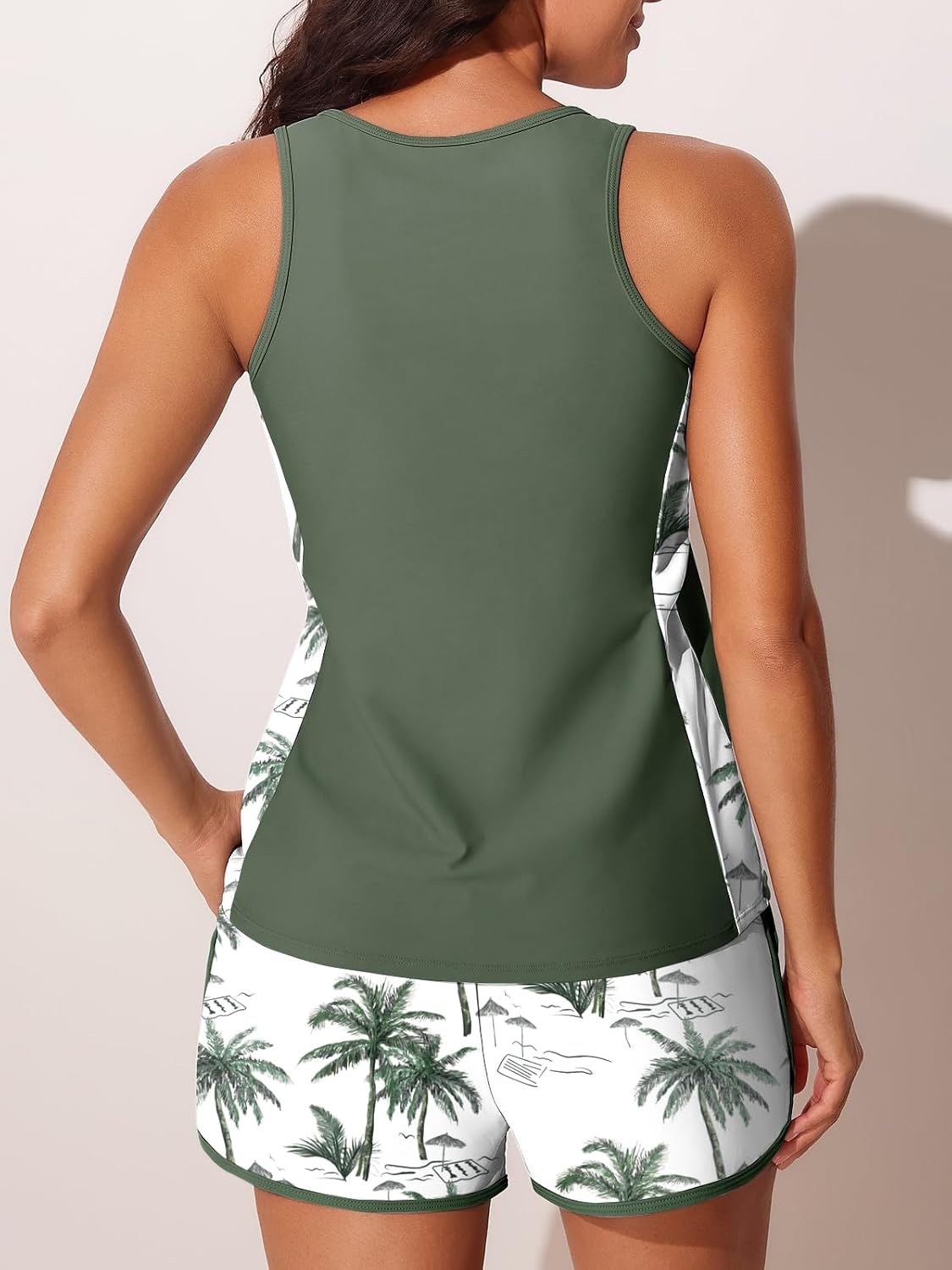
You bought a tankini last season that promised tummy control on the tag, and it delivered roughly zero of it by hour two at the pool. If that sounds familiar, you’re not alone — and the problem almost certainly wasn’t your body. It was the construction. “Tummy control” is one of the most loosely used phrases in swimwear marketing, and it covers a range that runs from a thin power-mesh lining sewn behind a single panel, all the way to a structurally engineered compression layer with strategic seaming that actually redirects pressure toward the sides of the torso rather than just pushing everything straight forward. Knowing the difference before you click “add to cart” is what this guide is for. We’ve pulled together everything — published specs, aggregated shopper reviews, and construction details from brand documentation — so you don’t have to open thirty tabs to figure out which tankini top is genuinely doing the work.
| EDITOR'S PICK[Aqua Eve Plus Size Two Piece Sw…](https://www.amazon.com/dp/B0F672S9FH?tag=greenflower20-20) | Mid-tier[Holipick Women Plus Size 3 Piec…](https://www.amazon.com/dp/B09CZ6GT1V?tag=greenflower20-20) | Budget pick[Holipick Plus Size Tankini Swim…](https://www.amazon.com/dp/B0B9B7FQDN?tag=greenflower20-20) | |
|---|---|---|---|
| Pieces | — | 3 | 2 |
| Fit style | Flowy | Athletic | Blouson |
| Racerback | — | — | ✓ |
| Navy | Black Dinosaur | Floral | |
| Price | $43.99 | $38.99 | $35.99 |
| See on Amazon → | See on Amazon → | See on Amazon → |
What “Tummy Control” Actually Means in Construction Terms
Let’s start with what the phrase is doing (and not doing) inside a tankini top.
A tankini is a two-piece swimsuit where the top is a tank-style shirt rather than a traditional bikini top — it typically covers the midriff. That coverage alone is sometimes marketed as “tummy control,” which is technically not false but is also not what most shoppers mean when they reach for that search term. What most of us actually want is compression and smoothing — fabric and structure that hold the midsection in a stable, comfortable shape without riding up, cutting in, or requiring constant readjustment.
The engineering tools that actually accomplish this are:
Power mesh lining — a tightly woven nylon or spandex layer bonded or sewn to the inside of the front panel. On its own, mesh lining adds light-to-moderate compression. Its effectiveness depends entirely on how many layers are used and how far the panel extends. A lining that stops two inches above the waistband does nothing for the lower belly, which is often the area shoppers most want addressed.
Seaming pattern and panel count — this is where real differentiation lives. A single-panel front with no internal seaming just stretches flat. A multi-panel construction with curved seams (sometimes called ruching seams or contour seams) creates internal tension lines that redistribute the fabric’s grip across the body rather than concentrating pressure in one place. Think of it the way a well-tailored blazer works: the seams are doing structural work, not just decoration.
Boning or channeling at the waist — rare in tankinis but present in some structured tops from brands like Miraclesuit and Magicsuit. A horizontal channel at the natural waist keeps the bottom hem from riding up while also maintaining a consistent compression zone across the abdomen.
Good Housekeeping’s overview of plus-size swimsuits notes that the most consistently reviewed tummy-control pieces share a common trait: the control panel extends from mid-chest to at least two inches below the natural waist, rather than focusing only on the belly button zone. Shoppers who found this construction reported significantly better all-day comfort and hold compared to tops where the lined panel stopped at the navel.
The Seaming Breakdown: Four Configurations and What They Deliver
Here’s the practical comparison most buyers never see laid out clearly. Not every brand documents seaming explicitly, but published construction photos, reviewer close-ups, and brand spec sheets give us enough to work with.
Configuration 1: Single-layer gathered front This is the most common construction in the $35–$60 price tier. The front is one continuous piece of fabric, often with horizontal or vertical ruching (gathered folds sewn into the fabric) to add visual texture. The ruching softens the silhouette by breaking up a flat surface, but it provides very little actual compression — the fabric has to be loose enough to gather in the first place. Reviewers at Glamour consistently note that gathered-front tankinis are better for camouflage than for hold. If you’re looking for coverage and comfort without compression, this works. If you want actual smoothing, it’s not the right tool.
Configuration 2: Bonded power-mesh front panel, single piece A step up — the exterior fabric has a power-mesh layer sewn directly behind the front panel, usually from the under-bust to the hip. This is the most common structure in the $65–$100 range (think Swimsuits For All’s control-line tops and Lands’ End’s Tugless Tank silhouettes). Owners consistently report that this configuration holds through the first two to three hours of active wear before the mesh begins to relax. Saltwater and chlorine exposure accelerate that relaxation if the mesh is standard nylon rather than chlorine-resistant PBT or Xtra Life Lycra. Swimwear365’s fabric guide flags this directly: standard nylon-spandex mesh degrades noticeably faster in chlorinated environments compared to PBT blends, which are engineered to maintain their recovery properties through 200+ hours of pool exposure.
Configuration 3: Multi-panel contour construction with internal seaming This is the configuration that does what the marketing promises. The front of the tankini is divided into two or more panels joined by curved seams. The seams create directional tension — fabric on either side of the seam is pulled in slightly different directions, which means the garment is actively shaping rather than just covering. Miraclesuit’s documented construction approach (per their published fit-technology overview) uses what they call “MIRATEX” fabric in a multi-panel format specifically to create this tension-mapping effect. Magicsuit’s structured tops use a similar logic. InStyle’s review roundup of tummy-control swimsuits identifies multi-panel construction as the single most reliable predictor of positive long-term reviews among plus-size shoppers, particularly in sizes 18W and above where a single panel has more surface area to control and therefore more opportunity to distort.
Configuration 4: Waist-channeled or boned construction The most engineered option, almost exclusively found above $120. A horizontal channel at the natural waist anchors the bottom hem while a separate boned or stiffened side-panel keeps the silhouette stable through movement. Self’s coverage of supportive swimwear for larger busts points out that this construction also helps with a common problem in larger sizes: when the bust carries significant weight and pulls the top downward, a boned waist channel resists that pull and keeps the top sitting correctly on the torso. This matters especially for women with a high bust-to-waist ratio who find standard tankinis constantly creeping up.
By the Numbers: Construction vs. Price Tier
| Price Tier | Typical Seaming | Control Level | Chlorine Durability |
|---|---|---|---|
| $35–$60 | Single-layer gathered | Light (visual only) | Low-moderate |
| $65–$100 | Bonded mesh panel | Moderate | Moderate (check for PBT) |
| $100–$160 | Multi-panel contour seaming | Moderate-firm | Good (usually Xtra Life Lycra) |
| $160–$220+ | Waist-channeled / boned | Firm, all-day structured | Excellent |
Sources: Published construction specs, aggregated reviewer feedback via Good Housekeeping and InStyle, Swimwear365 fabric durability guide.
The Bust-to-Hip Problem Nobody Warns You About
Here’s the decision most buyers don’t make consciously but always feel: tummy-control seaming doesn’t operate in isolation. It interacts with the bust and hip seaming, and if those three zones aren’t calibrated together, you end up with a top that controls the belly while gaping at the bust or pulling tight across the hips.
Who What Wear’s swimwear brand guide flags this specifically for full-figure shoppers: a tankini with a strong front compression panel but no underwire or bust seaming can redistribute volume upward — the front panel compresses the midsection, but that compression has to go somewhere, and without structural containment at the bust, it migrates. For cup sizes D and above, a tummy-control tankini that doesn’t also include underwire support or a built-in shelf bra with side-sling seaming is likely to create a new fit problem while solving the original one.
Similarly, if you carry significant volume below the waist — a hip-to-waist differential of 14 inches or more — a tight front panel that stops at the natural waist can create a visible horizontal tension line right where the panel ends, especially in solid colors. Multi-panel construction with a gradual release at the panel edges handles this significantly better than a single compressed panel with a hard edge.
The practical rule: if your bust-to-hip differential is your primary fit challenge, prioritize seaming that addresses all three zones. If your midsection is the primary concern and you have a more proportional frame, a high-quality bonded-mesh panel at the $65–$100 tier may genuinely be sufficient.
The If/Then Decision Framework
If you need visual softening without compression, and you’re sizing in the $35–$60 range, a gathered or ruched single-panel front delivers exactly that — own what it is and don’t expect more.
If you want moderate all-day hold for a pool vacation where you’re mostly lounging, look for a bonded power-mesh front panel in PBT or Xtra Life Lycra fabric at the $65–$100 tier. Verify the lining extends to at least two inches below the natural waist before buying.
If you’re 18W+ and need hold that survives three hours of active movement, open water, or both, multi-panel contour seaming is non-negotiable. Budget $100–$160 and confirm the panel count from product photos or brand documentation — “tummy control” in the description alone is not sufficient evidence.
If you have a D+ bust and significant hip volume, and you need everything to work together, the waist-channeled or boned construction at $160+ is the one configuration that addresses all three zones simultaneously. InStyle’s reviewer notes and Good Housekeeping’s aggregated feedback both point to this tier as the one where full-figure shoppers most consistently report “finally found one that works” outcomes.
The seaming is doing the actual work. The tag just tells you the story — which is why reading the construction details before checkout is the skill that separates a purchase you’ll wear for three seasons from one you’ll return by Thursday.