April 21, 2026 • Adaeze Okonkwo • 9 min reading time • Prices verified June 18, 2026
Underwire Tankini Tops That Actually Hold a DDD+ Bust Without Blowing Out
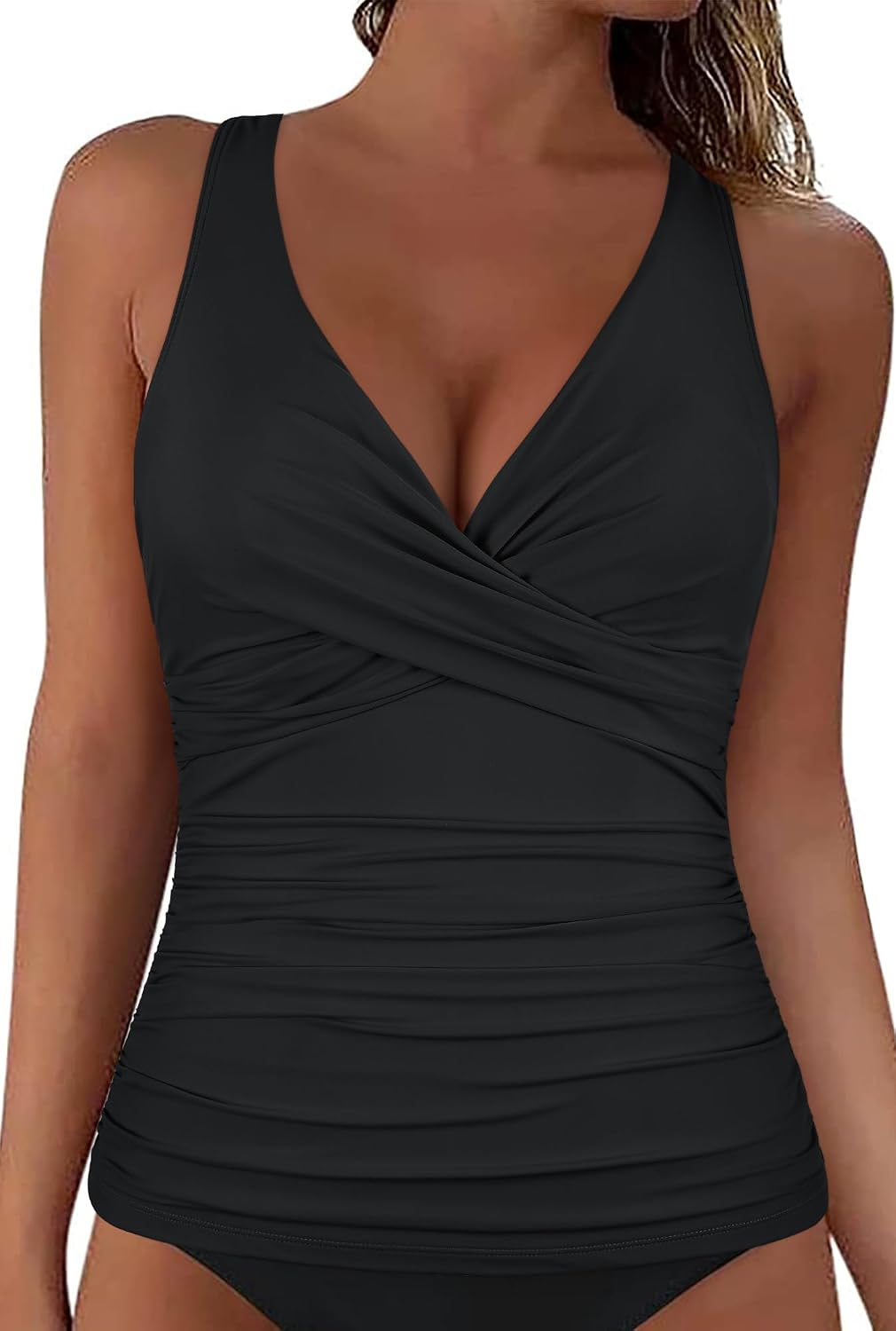
If you’ve ever stood at the edge of a pool and noticed your underwire starting to migrate — that rigid wire inside the base of a supportive swimsuit top that’s supposed to sit flush against your ribcage — you already know the problem this guide is solving. An underwire tankini top is exactly what it sounds like: a longer swim top (tankini = tank + bikini) that covers the torso past the waist, built with an underwire bra structure for real lift and separation. For a DDD bust (also written as F cup in UK sizing) and beyond, this style promises the coverage of a one-piece with the mix-and-match flexibility of a two-piece. The promise is great. The execution varies enormously by brand. We’ve organized every variable worth understanding — underwire channel construction, bartack stitching, strap architecture, fabric grade — so you can walk into a purchase decision with a clear framework, not thirty open browser tabs.
This guide treats you as someone who’s already bought a swimsuit that disappointed. You know your size. You know what “blowing out” means (the wire escaping its fabric channel, poking through seams, or deforming after a single season). What you may not yet have is a reliable way to predict, from a product page, whether a top will hold. That’s what we’re building here.
Why Underwire Tankini Tops Fail at DDD+ — and What “Blowing Out” Actually Means
Let’s be precise about the failure mode, because vague terms lead to bad purchases.
Blowing out refers to underwire channel failure: the fabric tunnel that encases the wire splits, frays, or separates from the cup lining at the seam where the two meet. At DDD+, this happens faster and more dramatically than at smaller cup sizes because the mechanical load is simply higher. A DDD bust in saltwater — wet fabric adds weight — puts substantially more lateral force on the wire ends than a B cup does. The wire ends are the highest-stress points. They’re where the underwire channel meets the strap attachment (or the side seam), and if the bartack stitching at those junctions is thin or sparse, that’s where the channel opens first.
Bartack stitching is a dense, tightly packed stitch cluster — visually it looks like a small rectangle of thread — applied at stress points to prevent seam separation. In quality swimwear construction, you should see bartacks at every wire-end anchor point and at the base of every strap attachment. Glamour’s roundup of large-bust swimwear consistently flags this as a differentiator between styles that last a season and styles that last a decade.
Wire channel reinforcement adds a second layer of fabric (often a heavier-denier tricot or a bonded tape) inside the channel itself, distributing load along the wire’s length rather than concentrating it at the ends. Brands like Anita Care and Freya build this into their swimwear the same way they build it into their lingerie — because they’re solving the same engineering problem.
The secondary failure mode is cup distortion: the underwire loses its curve, flattening under repeated saltwater exposure and UV degradation. This is a fabric-grade issue as much as a construction issue, and we’ll come back to it.
The Four Variables That Predict Longevity in a DDD+ Underwire Tankini
1. Underwire Channel Depth and Anchor Method
A shallow channel (common in fashion-forward brands prioritizing silhouette over engineering) leaves the wire with room to migrate. A deep channel — one where the wire sits fully encased with at least a few millimeters of clearance on all sides — keeps the wire stable under lateral compression (think: pool turns, wave impact, towel-drying).
Look for brands that describe their underwire channels as “reinforced,” “bonded,” or “double-lined.” Anita Care’s swimwear spec sheets, consistently cited by Swimwear365 in their large-bust buying guides, describe a bonded channel construction derived directly from their mastectomy bra line. That’s the benchmark: underwire architecture designed for clinical-grade stress, not fashion-season stress.
2. Strap Architecture — Width, Attachment Point, and Adjustability
At DDD+, straps do two jobs simultaneously: they anchor the cup upward and distribute vertical load across the shoulder. Thin straps (under ¾ inch) concentrate that load, cause shoulder grooving, and — critically — torque the strap attachment point in a way that accelerates bartack failure.
The decision math:
| Strap width | Load distribution | Shoulder comfort at DDD+ | Bartack stress |
|---|---|---|---|
| Under ¾ inch | Poor | Low | High |
| ¾–1 inch | Moderate | Moderate | Moderate |
| 1 inch+ with boning or channeling | High | High | Low |
Adjustable straps add a variable that matters beyond comfort: when straps are correctly sized to your torso length, the wire sits against your ribcage rather than floating or digging. Good Housekeeping’s large-bust swimsuit reviews repeatedly note that strap adjustability is the single most impactful fit correction tool for women between standard sizes — more impactful than cup size alone.
3. Fabric Grade — Fiber Blend and Denier
Swimsuit longevity is largely a fiber story. The three blends worth knowing:
- Xtra Life Lycra (Invista): Retains 98% of its stretch after 10 hours of chlorine exposure per Invista’s published spec data. Industry-standard for performance swimwear. Freya, Miraclesuit, and Magicsuit all use it or equivalent blends.
- Carvico Vita (Italian mill): PBT-based (polybutylene terephthalate) fabric with higher chlorine resistance than standard nylon-spandex and better UV stability. Used by several European specialty brands.
- Standard nylon-spandex (no designation): Common in fashion swimwear at under $60. Degrades faster in saltwater and UV; underwire channels begin to loosen as the surrounding fabric loses recovery.
Self’s guide to swimsuit fit notes that fabric recovery (the ability to return to original shape after stretching) directly affects how long an underwire stays correctly positioned. A cup that’s stretched out of shape isn’t just uncomfortable — it stops functioning as a support structure.
4. Torso Length and Band Fit
This is the variable most DDD+ shoppers underestimate. An underwire tankini top is only as effective as its band fit. If the band (the horizontal elastic at the base of the top, below the underwire) is too loose, the entire cup assembly floats rather than anchors. At DDD+, floating means the wire migrates up and inward — the classic “poking in the armpit” complaint.
InStyle’s plus-size swimwear coverage consistently recommends sizing by band measurement first, then addressing cup fit through underwire style selection, rather than sizing up across the board. For full-figure shoppers, this means: if you’re a 40DDD, the 40-band is your anchor; the cup depth accommodates the bust volume. Going to a 42 band for “room” eliminates the tension that holds the wire against your ribcage.
How to Compare Options Across Price Tiers
Here’s the honest version of the price-to-construction relationship:
$35–$70 (ASOS Curve, City Chic, Amazon fashion brands): You’re getting fashion silhouettes and trend-forward prints. Underwire channels exist but are typically single-layer. Bartack density is minimal. Owners across aggregated reviews report these tops working well for one season of moderate use — one to two beach trips — before wire migration begins. Worth it for low-frequency use or as a seasonal experiment.
$70–$130 (Swimsuits For All, Lands’ End, Eloquii): Construction quality jumps meaningfully. Lands’ End in particular uses reinforced underwire channels and publishes strap-width specs. Owners frequently report two-to-three season durability with proper rinse-and-dry care. This is the tier where you start seeing real cup engineering: molded foam cups rather than sewn-panel cups, and strap hardware rated for repeated adjustment.
$130–$220+ (Freya, Fantasie, Anita Care, Miraclesuit): This is where underwire construction matches or exceeds premium lingerie standards. Freya’s swimwear line — per Swimwear365’s detailed brand breakdown — uses the same wire gauge and channel construction as their bra line, just with waterproof-rated fabric encasing it. Owners at this price point report three-to-five season durability as the norm, with the most common end-of-life complaint being fabric fading rather than structural failure.
By the numbers:
- Anita Care underwire one-piece: ~$180–$220 | Bartack points per cup: 6+ (per published construction specs)
- Freya swimwear underwire top: ~$90–$120 | Wire gauge: lingerie-equivalent, per Swimwear365 brand profile
- ASOS Curve underwire bikini: ~$35–$50 | Typical review-reported lifespan: 1–2 seasons
Decision Rules: If X, Then Y
This is the framework. Apply it to whatever product page you’re currently weighing.
If you’re above a 40-band and DDD+ cup: Prioritize band stability over cup volume claims. A tank top that runs large in the band will fail structurally regardless of how the cup is engineered. Size to band first.
If you’re shopping for chlorinated pool use (frequent, weekly): You need Xtra Life Lycra or a PBT-dominant fabric. Standard nylon-spandex will lose recovery within a single season of weekly pool exposure. The underwire channel will loosen before the wire itself fails.
If saltwater is your primary environment: Wire corrosion is a secondary concern after fabric degradation. Look for brands that specify “coated” or “rust-resistant” wire cores. Rinsing immediately after ocean use extends wire life significantly — owners consistently report that skipping the fresh-water rinse accelerates channel failure at the wire ends.
If your budget is under $80 and you need this to last: Lands’ End and Swimsuits For All are the honest picks at this tier. Both publish construction details (strap width, wire type) that fashion brands typically omit, and aggregated owner reviews show consistent multi-season durability. ASOS Curve delivers surprising first-season performance but owners across reviews report drop-off in year two.
If you’re investing $130+: Freya and Anita Care are the benchmarks for DDD+ wire construction, per Glamour and Good Housekeeping’s repeated recommendations in their large-bust swimwear roundups. The price premium buys you bartack density, reinforced channels, and lingerie-grade strap hardware — not a brand name.
If wire migration is your specific chronic problem (wire traveling up and inward by afternoon): This is almost always a band-fit issue before it’s a construction issue. Tighten the band one hook, or size down in the band with a sister size (e.g., 40DDD → 38F), and watch whether the wire stabilizes. If it does, the construction was adequate; the fit was the variable.
The market for DDD+ underwire tankini tops in 2026 is genuinely better than it was five years ago — more brands are applying lingerie-grade construction to swimwear, and more retailers are publishing the specs that let you evaluate before you buy. The gap between a top that holds and one that blows out is almost always predictable from the construction details, not the marketing copy. Know what you’re looking for at the wire channel, the bartack points, and the strap attachment — and the product page tells you most of what you need to know.